
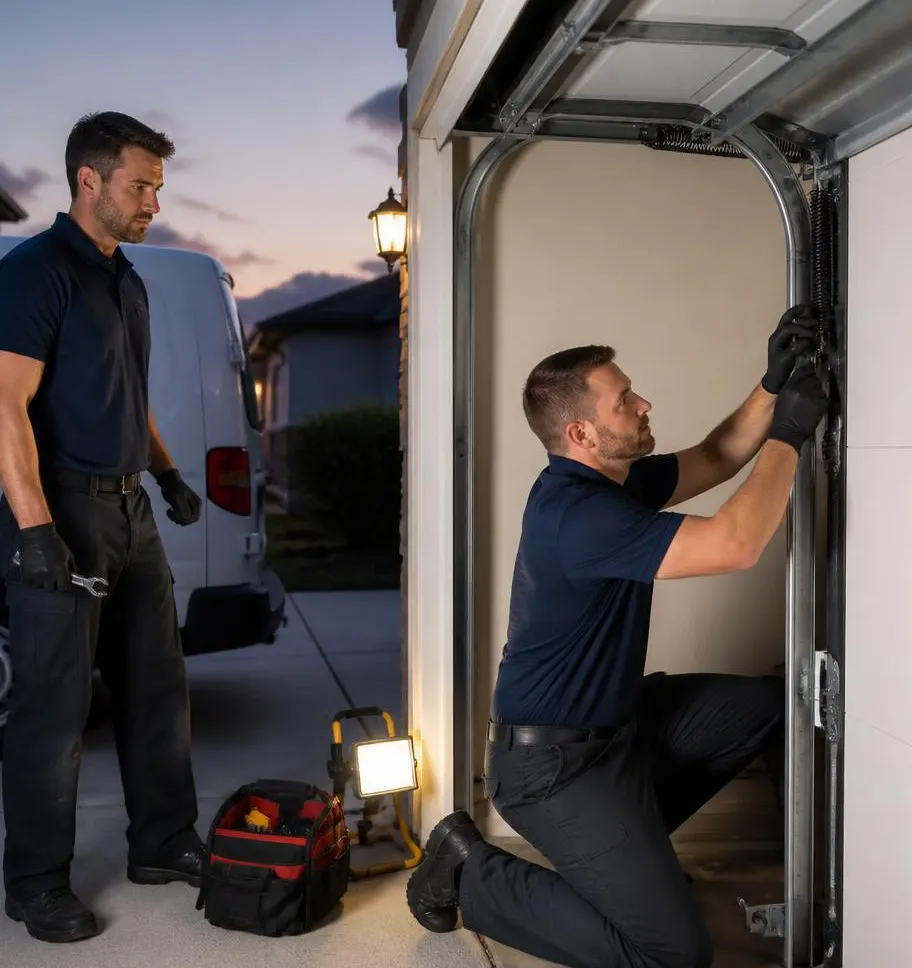
What a Technician Sees This Time of Year
A typical late-fall call starts the same way: the door was fine all summer, and now that mornings are cooler, it's grinding, hesitating, or reversing halfway up. The homeowner assumes something broke overnight. In reality, the door has been quietly wearing down since June. Months of 110-degree afternoons bake grease out of hinges, dry out rubber seals, and stress openers that were already running hot. Once overnight temperatures drop into the 40s and 50s, metal contracts, lubricant that was already thinning turns gummy or disappears, and problems that were masked by heat suddenly show up as noise, slow response, or a door that won't close all the way.
Getting ahead of this before winter settles in means less emergency repair work and a door that runs quietly through the cooler months.
Check What the Heat Actually Did
Before doing any maintenance, take stock of summer damage:
- Weatherstripping: Run a hand along the bottom seal and side trim. UV exposure makes rubber brittle, and it often cracks or shrinks away from the frame. A gapped seal lets in cool night air, dust, and the occasional monsoon rain that's still possible into early fall.
- Panels and paint: Look for fading, chalking, or warping on steel and wood doors, especially on west- and south-facing garages that take the worst afternoon sun.
- Tracks: Monsoon dust storms leave a fine grit that works its way into the track and rollers. If it mixed with old lubricant, you'll find a gritty paste instead of clean grease.
Rebalance Before You Relubricate
Temperature swings between hot days and cool nights change how springs behave. Metal that was fine under summer heat can feel stiffer or looser once nights cool off. Test the balance: disconnect the opener, lift the door halfway by hand, and let go. It should stay roughly in place. If it drops or shoots up, the spring tension is off and needs adjustment before you do anything else — lubricating a door with bad spring tension just makes the symptoms quieter, not safer.
Spring replacement is not a DIY job. Torsion springs are under heavy tension and can cause serious injury if released incorrectly. If the balance test fails, that's a call for a professional, not a weekend project.
Re-Lubricate With the Right Product
Summer heat thins out standard lubricants fast, which is why so many doors sound dry by October. Before winter:
- Wipe down rollers, hinges, and the torsion shaft with a clean rag to remove dust and old residue.
- Apply a silicone-based or lithium-based garage door lubricant — not WD-40, which is a solvent and evaporates quickly, leaving metal drier than before.
- Lubricate rollers (if steel, not nylon), hinges, the torsion spring, and the track rollers glide against — not the track itself.
This single step fixes a huge share of the grinding and squeaking that shows up as nights cool down.
Reseal Against Dust and Cool Air
Replacing worn weatherstripping is cheap insurance against both desert dust and the cooler overnight air that starts settling in once winter arrives. Bottom seals and side weatherstripping are sold by length at most hardware stores and are a straightforward swap. If door panels show heat warping that's affecting the seal, that's a sign the door itself may need attention beyond just the trim.
Clean and Test Sensors and the Opener
Monsoon season leaves a layer of fine dust on photo-eye sensors near the bottom of the tracks. A thin film is enough to cause random reversals or a door that refuses to close — a common complaint this time of year. Wipe both sensor lenses with a soft, dry cloth and make sure they're still aligned (the indicator lights should be solid, not blinking).
Also check the opener itself. Units in uninsulated garages take the brunt of summer heat, and some controller boards or capacitors degrade faster under sustained high temperatures. If the opener has been sluggish, noisy, or inconsistent all summer, cooler weather is a good time to have it inspected rather than waiting for it to fail completely.
Inspect Hardware While You're In There
Check that bolts on the track brackets and hinges haven't loosened from months of vibration and thermal expansion/contraction. Tighten anything loose with a wrench, and look at cables for fraying — a problem that often gets worse once temperatures swing more widely between day and night.
When to Call Casa Grande Garage Door
If the balance test fails, springs look stretched or rusted, the opener is struggling, or sensors keep misfiring even after cleaning, it's time to call in a professional rather than keep troubleshooting. Casa Grande Garage Door handles spring replacement safely with the right tools and tension gauges, and our preventive maintenance service covers a full inspection of springs, cables, rollers, sensors, and opener performance in one visit — catching the kind of heat damage that often isn't obvious until the weather changes.
If your garage door has been acting up as the nights cool down, give Casa Grande Garage Door a call. We serve homeowners and businesses throughout Casa Grande, AZ and nearby communities, and we're ready to get your door running smoothly before winter settles in.